Wine Aerators

July 28th, 2010

Until about 2 weeks ago I did not have strong feelings about wine aerators, or even decanting wine for that matter.  Sure, young wines seemed to me to benefit a bit from “breathing” (exposure to oxygen).  But were these “gadgets” or decanters really worth the trouble?  I felt it wasn’t, and was content to vigorously swirl the wine in the glass, figuring this exposure to oxygen would be enough.

But I’ve recently been a little disappointed.  I was supposed to be selling a wine, and the way most wines are sold is by providing tastes to the wine shop buyer.  Upon opening the wine for the buyer I would taste as well – a practice to ensure that the wine is sound and “showing” properly.  It wasn’t fun forcing a smile when the truth was that I felt the wine in question was tight, one dimensional and rather simple tasting.  This wine had to have more going on I thought, but while tasting the wine we weren’t experiencing the possible depth.

I brought an open bottle of the aforementioned wine home and without much thought opened the wine up a few days later.  I had transfered the wine to a half bottle, removing most of the oxygen, but it wasn’t completely free of oxygen & had enough exposure to effect the wine.  And effect the wine it did!  This closed, tight, one dimensional wine was gone…in its place a bright, fruit driven and delicious wine.

A few weeks later I was visiting friends (and doing business) up at the Wine Enthusiast headquarters.  While there I decided to invest in a “Vinturi” wine aerator.

I used my new aerator with friends a few days later and I fell in love.  What can I say…I’ve used it a bunch of times since and I truly believe that this device does what it claims.  It helps the aromas to come through, the otherwise hidden fruit flavors are clearly apparent and both the tannins and acid seem softer, providing for a smoother mouthfeel and finish.

I have no business affiliation with Vinturi.  I gain nothing by promoting this item.  But I gotta tell you, if you have ever experienced a wine that was young and seemed tight, boring, one dimensional or otherwise not what you expected, maybe all you need is a Vinturi to experience the wine’s true potential.

Happy Vinturi Wine Tasting!

WTG

  • Share/Bookmark

Ying Yang Wine

July 20th, 2010

As the US rep for Israel’s Carmel Winery I have many responsibilities…beyond increasing sales.  I am proud to be working for Carmel as Carmel the winery has followed nicely in the wine progression.  Recent years have seen the winemaking at Carmel move beyond the fruit-bomb, powerhouse wines to finesse, more elegant wines.

If you are a wine lover who enjoys big robust wines you are no alone.  The truth is, depending upon my mood, I too love these wines.  But at this stage in my wine progression I have come to appreciate the subtle elegance of wines that have not been aged in lots of new oak, that do not have 15% alcohol, whose acid is still quite apparent and that might actually be overpowered by a big rare steak (my favorite food) – something that would NEVER happen to a Cabernet Sauvignon.

I bring this up (again) as we will be unveiling a new Carmel wine here in the US in the coming weeks; Carmel 2007 Mediterranean.  The wine, as its name might indicate is a blend of (mostly) Mediterranean varietals made in a subdued style with very little new oak.  This wine is not a fruit bomb and is not robust.  While it does have a nice extraction, I worry that consumers will try it and be disappointed.  It is easy to put a big, brawny wine in one’s mouth and say WOW – this is good.  But it is much more difficult to fully appreciate a wine that doesn’t scream at the top of its lungs.  The restrained wine may possess an endless amount of brilliance, but in a world of muscle-neck wines the quiet wine could easily get lost.

There are many wine critics out there and the ones that have been most successful seem to advocate on behalf of big, robust wines.  I wonder if they truly believe that these are “better” wines, or if they have come to realize that these wines are easier for the masses to appreciate and as such would prefer to recommend this style to a style that might leave people wanting more.

Who knows.

What I do know is that the Carmel “Mediterranean” is a well made wine that will require a lot of hand selling.  But I look forward to talking wine with those who are truly “wine curious” and I hope I am able to enlighten some of these people to the benefits of a restrained and elegant wine.

Happy non-fruit-bomb wine tasting!

WTG

  • Share/Bookmark

Sommel… YAY or NAY?

July 11th, 2010

NY Times wine writer Eric Asimov wrote last week about Sommeliers at restaurants who take the first sip of wine to ensure that it is sound before arriving at the diner’s table.

Alder Yarrow in his wine blog Vinography, wrote “let sommeliers do their jobs“.

To get the full background you should read the Asimov piece & if interested the Vinography piece.  But in a nutshell, the issue revolves around Sommeliers tasting wine that diners order prior to the diners tasting the wine.  The taste is small and the motives of the sommelier are good –  both Asimov & Yarrow seem to be advocating for this practice.

WHAT! I’m flabbergasted!!  True I have the experience to detect many flaws that those who don’t make wine their life might not have.  And yes, I believe that providing this service to diners IS valuable.  BUT, my belief is that the sommelier should ONLY taste the wine once invited to do so by the diners…AFTER the bottle has been presented to and opened in front of the diner(s).

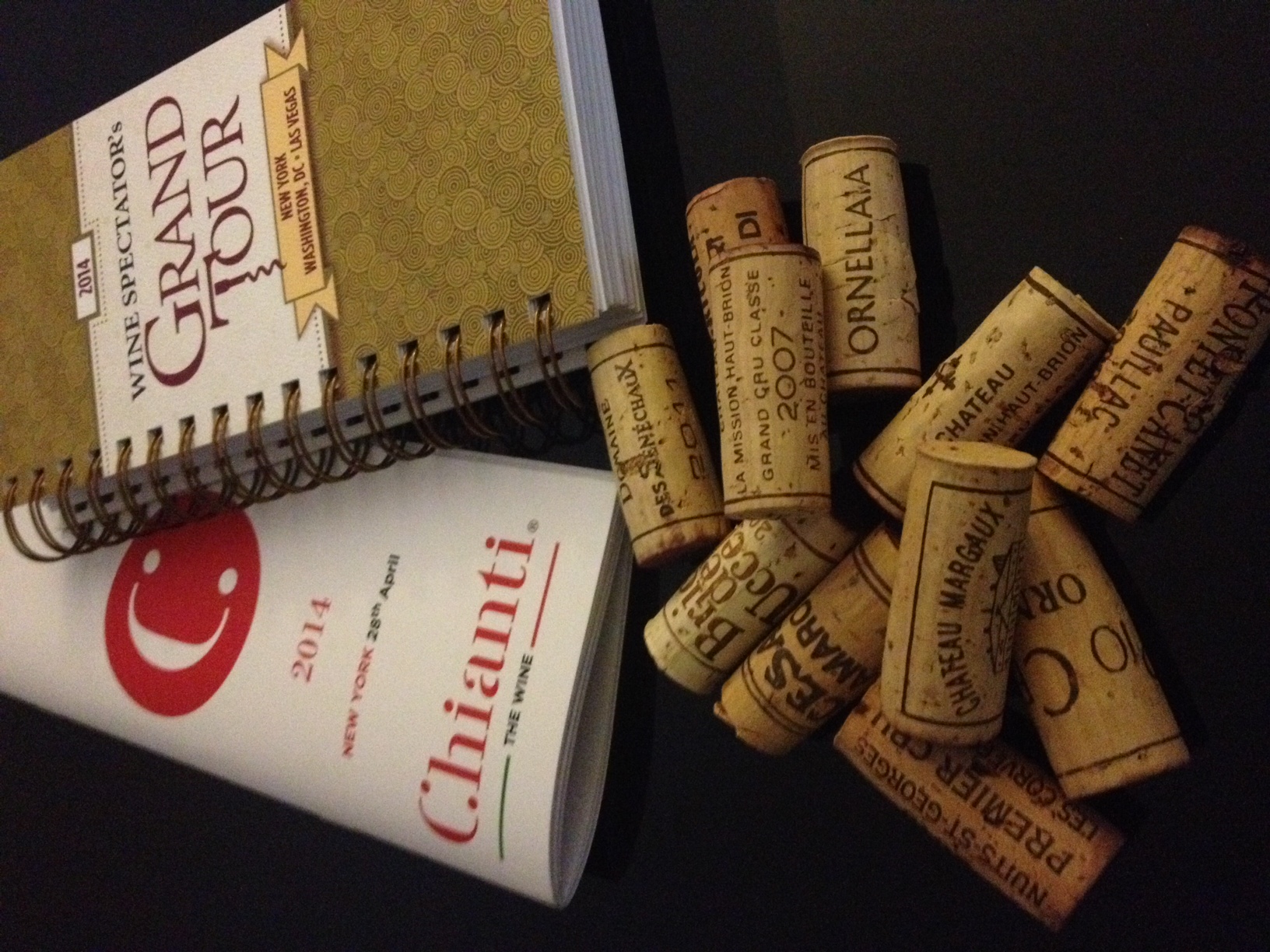
I DO think that many diners might be wise to ask someone with a more experienced palate to try a wine they are not familiar with.  But what of the bottle presentation?  What of the opening of the bottle in front of the customer?  What of the smelling of the cork (I save corks but don’t fancy smelling them)?

I hear the points my colleagues are making, but think they are missing the point.  Wine service in a restaurant is a time honored tradition.  Part of this is the presentation of the wine to the diner in a restaurant.  If this bottle is being presented to a sommelier to taste in a kitchen only to be brought out to diners already opened, this tradition is being broken, and much like the screw cap, the romance of wine as we know it is fading away…

Maybe I’m missing something here as I admittedly don’t typically dine in five star restaurants with sommeliers and the like.  But if I’m not missing anything, there is something very wrong here.

Happy Sommelier-less restaurant wine tasting!

WTG

  • Share/Bookmark

Anything But Chardonnay

June 27th, 2010

Yes, there is an “Anything But Chardonnay” club, dubbed “ABC”, that from what I gather is anti anything Chardonnay.  While I am not a club member, I have become mostly disenfranchised with Chardonnay.  Or at least Chardonnay NOT from Burgundy.  Chablis, the steely crisp Chardonnay from the Chablis region, or White Burgundy….YUM – Love it (or at least some of it)!  Yet much (but of course not all) of the other stuff – POSERS!

I’m no Francophile,  but I do believe that there is something magical about the wines of Burgundy.  Pinot Noir’s best expression seems to come from Burgundy.  Sure I’ve had some other charming Pinot Noir, but none has ever seemed as magical, complex, primal, balanced & long-lived as some of the Burgundy I’ve been fortunate to taste.

But I digress…

Getting back to Chardonnay, I attended a tasting of white wines last week.  We started the tasting with 5 Chardonnays – all made in Israel at different wineries.  The first two were “unoaked” Chardonnays.  I do enjoy a good crisp white, but these unoaked Chard’s underwhelmed.  The focus seemed more on the acidity (a vital component) than the fruit, and the resulting wines seemed bitter and unbalanced.  Two of the next 3 were oaked, but sadly the oak dominated and masked any fruit that may have been hiding underneath.  I did enjoy 1 of the 5 Chard’s.  It seemed to have the right balance between fruit, acid, oak & cream.

Now I mention cream, but no, there was no dairy product added.  In addition to the primary fermentation (that converts sugar into alcohol) in wine, there is a secondary fermentation known as “malolactic” fermentation that converts bitter “malic” acid into CREAMY “lactic” acid.  This is where the buttery or creamy flavors in Chardonnay come from.

I don’t want to get too carried away with the technical aspects here, but I do want to tie in to the ABC (anything but Chardonnay) club.  Chardonnay is made in cool climates (apples & peaches), moderate climates (honeydew & pears) and warm climates (pineapple & lichee).  It can be 100% oak aged, or it can be partially (33%, 50%, 66%, etc.) oak aged.  It can have a full malolactic, or a partial malolactic.  It can be bready as a result of “sur lie” – a process whereby the dead yeast cells are left in contact with the wine and stirred around to add complexity & yeast flavors.

There are so many ways Chardonnay can be made.  Personally I think the best examples originate in Burgundy.  Yet while I may not be a fan of lots of the Chardonnay out there, I am often surprised by a winemakers ability to make the right style Chardonnay for his fruit.

So if you have had a bad Chardonnay & have considered joining the ABC club, I implore you not to give up.  Keep an open mind, taste when you can, and when all else fails pick up a White Burgundy.

Happy Chardonnay Wine Tasting!

WTG

  • Share/Bookmark

Resilient wine

June 21st, 2010

I’ve been suffering a bit of writers block of late.  Couple that with a busy work schedule, the NBA finals, and a desire for some serious changes to the site (blog) and you get almost 2 weeks of inactivity.  SORRY….

But I was inspired by something I read before the weekend.  I was reading Robin Garr’s 30 second Wine Advisor & his most recent piece about aged wines; “Older of Better“.

The piece talks a bit about how wines change as they age, with some improving (though I think that is subjective).  He also mentioned that most wines are meant to be consumed young.  And I would tend to agree, that most wine is in fact made with the intention that it be consumed within a few years of release.

I know people who prefer young wine to old wine.  Young wines have firm tannins and big fruit.  Whereas older wines can be more acidic and absent of fruit.

Prior to writing tonight’s post, I tasted two older wines over the weekend. Neither were of the 20+ years old category, generally reserved for top wines.  But both were from the 2000 vintage and neither was a reserve wine of sorts – so safe to assume it was not meant for long term aging.

The first, a Merlot from Israel, showed a remarkably youthful color.  Sadly it was corked – no pleasure to be derived here.

The second was a simple Bourgogne.  Whereas 1er Cru or Grand Cru Burgundy can age for MANY years, the more simple Bourgogne is one of those “intended for early consumption” wines.  So the 2000 being alive was in my mind a long shot.  Popped the cork for Dad and others this afternoon and sure enough it was BROWN – a sure sign that the wine is dead…right?  Well, it had some oxidative qualities, but a remarkably fresh acidity and some secondary characteristics of dried fruit, leather & mushrooms.  What can I say, I loved it!

This wine might  not be for everyone.  But the funky secondary characteristics are one of the most exciting things about aged wines.  Drinking a young wine is like checking out the babies in a maternity ward.  Sure they all look a bit different, but when it comes down to it, unless it is your baby they are just a bunch of diapered newborns.  Give that newborn 5, 10 even 20 years to age and now you’ve got character.

The “how to properly age wine” conversation is a completely different topic (which I think I’ve previously covered), but if you have an open mind to wines that are not fruit forward, and you have the opportunity to try an aged wine, or at least put one away for several years, try it.  You may have an aged wine epiphany!

Happy aged wine tasting!

WTG

  • Share/Bookmark

Wine Tasting trick

June 7th, 2010

My palate-training journey is much like my exercise regimen.  At times it is fun.  Sometimes it seems like a chore.  I’m often humbled.  But the more I do it the better I get (or so I think).

I often tell the story of the well know winemaker I asked about the secret to wine tasting.  She smiled and said something along the lines of “sweetheart, there are few true shortcuts in life – you must taste, taste, taste…”.  Shucks!

I watch & listen as others taste.  And I’m happy to ask questions.  I don’t always follow the things I hear, but I have learned some valuable tips.

Today I’m here to tell you that it isn’t mad science – tasting wine can be rather simple…

…ok, maybe not simple.  But a really sweet woman (yes, I think women have better palates than men) I met while I was selling wine shared what I consider to be valuable advice.  She spoke of the importance of “the start & the end”.

I have heard lots of people speak of the “mid-palate”.  In its simplest form, wine has an “attack”, a “mid-palate” & a “finish”.

The attack is how the wine tastes in the front of your mouth when it first passes through your lips.  The mid-palate is how it feels as it is IN your mouth (whatever that means).  And the finish, AKA the aftertaste is how you feel about the wine one you have spat/swallowed.

When I asked the woman what she meant by “the start & finish” she spoke initially about the aromas of the wine.  Were they one-dimensional?  Where they common or simple aromas?  Or were these aromas unique, complex, and diverse?  Interestingly, she put less value on the all important (to some) “mid-palate”, skipping it over and instead concentrating on the finish.  Was it pleasant or bitter?  Was it hot (from high or out of balance alcohol)?  Was it short – a few seconds?  Or was it long – did it linger pleasantly for a minute or more?

It has been a few years since this mini wine tasting lesson but I still use this sage advice.  While I admittedly enjoy the mouth feel of an oaked wine, I have come to understand that any winemaker can age their wine in oak and give it that full bodied feel.  But only the best grapes can contribute to make a wine with pleasant, diverse  & interesting aromas (start) as well as a soft, long & pleasurably lingering finish (end).

Happy “start & end” wine tasting!

WTG

  • Share/Bookmark

Wine Enthusiast – Toast of the Town (Ch. 3 – 2010)

June 1st, 2010

For the third consecutive year I was fortunate enough last week (May 24) to attend the Wine Enthusiast “Toast of the Town” Food & Wine event at Lincoln Center’s Koch Theater (year 1 & year 2).

If there is anything negative I can say about this event it is that it is so damn predictable…predictably GOOD!!!

Seriously though I believe that this is the quintessential wine & food event.  There are other TOTT’s in major US cities such as Atlanta, LA, Chicago & Washington, DC.  I can only imagine that the others are also quite special.  Top restaurants send their chefs who prepare (sometimes actually cook over burner) small tastes of 1-3 items and distribute to the guests.  And while I was there for the wine, I heard many guests comment how the food was the best part of the evening for them.

But this is a WINE blog, not a food blog.  So I’ll keep things short, but I do want to mention a few standout wines.  Though there were probably several hundred (I’d guesstimate about 250) wines there, I only had a chance to samples about 60 wines (I counted 59 short tasting notes though I must have tasted something I neglected to make note of).

Before mentioning the noteworthy wines, I’d be remiss to ignore the flawed wines I found that night.  Now flawed wines happen.  Wines can be corked as much as 10% of the time (though the # is probably closer to 5%).  And other flaws do occur, especially when producers are showing older vintages (which wasn’t that common, but I did try an older vintage wine or two).  What surprised me most was the amount of flawed wines I discovered that the pourers had no idea were flawed.  I suppose they weren’t all majorly flawed and it is possible that some I thought were flawed were not.  But the fact that the pourers didn’t seem to have any clue about the wines I thought was pure laziness on their part.  Maybe I am taking this strong position as I was SHOCKED when a pourer concurred with my assessment of a wine as cork & proceeded to put the wine aside to be “later to the masses”. Again, maybe they were simply appeasing me, but with what these producers spend on marketing and to be at these events don’t you think they should make sure that they are showing their best???

OK, standout wines (in no particular order)…

I’ve tried the standard Marlborough Kim Crawford Sauv Blanc before, but here I had the opportunity to try the “Drylands” Sauv Blanc (herbaceous & tart) as well as the “Small Parcels Spitfire” Sauv Blanc which felt more old world in style – restrained minerals and dried grass rather than new world citrus & freshly cut green grass.

I tried a 2008 Fevre Champs Royaux (Chablis) at the Henriot table that was fresh, steely & crisp – all qualities I love about Chablis.  I remarked to the woman (KZ) that I previously did a Fevre tasting that I enjoyed but did not love and she informed me that there was a change of ownership and I might have tasted the wines from the previous owner (Fevre).  I was excited to hear that my palate was good enough to detect a change in style (with the change in ownership)…only to return home, read my post about the previous Fevre tasting and realize that I was WRONG.

Also at the Henriot table was a Champagne (NV Blanc Souverain Pur Chardonnay) that was bready/yeasty with a complex palate and decent mid-sized bubbles.

I had 3 wines at the Francis Ford Coppola table.  The “Director’s Cut”, a blend of Cab (54%), Zinfandel (34%) & Cab Franc (12%) was velvety soft & complex with an array of fruit.  The “Votre Sante” Pinot, a Cali Pinot (usually NOT my favorite) was light & restrained with a lively acidity.  And the famous “Rubicon Estate (2006) CASK Cab was still pretty tannic, LOADED with fruit, yet super soft on the palate and quite nice.

The Yalumba 2004 Signature Cab/Shiraz was one of my favorites of the night.  Deep, dark ruby colored wine, with cola, mocha, cherry coke & even chocolate aromas.  A fresh & fruity wine that was not heavy and finished long and pleasant.

From Evaton, I most enjoyed the Sogrape 2007 Callabriga Reserva Tinto that had a pronounced tar/cola nose and with soft tannins and a long finish.

I tried the Robert Mondavi 2006 Cab reserve that was pretty good but I probably did not give it a fair chance as it was a “Mondavi” wine.

The Ruffino 2004 Romitoria di Santedame had pronounced herb & cherry cola aromas (do we see a theme of what I enjoy here?) with a light & fresh palate and medium-long finish.

Louis Martini Monte Rosso Vineyard Cab (2005) was deep, dark & brooding, with black fruit, mocha-chocolate & a soft palate.

The Antinori 2005 Marchese Antinori Riserva was already throwing lots of sediment with its lovely red berry nose and LONG finish.

The Hogue Cellars 2006 Reserve Merlot had mocha chocolate & bitter orange peel wrapped around silky tannins and a pleasing long finish.

And among my last stops was PerryMoore Wines to taste their Cabs, the 2006 Beckstoffer To Kalon which was deep, rich, complex & extracted with blue fruit & silky tannins.  As well as their 2007 Stagecoach vineyard cab which had black fruit on the nose, a big, lush midpalate that transitioned to a eucalyptus/mint and a medium-long finish.

In all yet again a winner event.  And while unless you live in Washington, DC (event coming on June 11) you will have to wait until next year, I strongly recommend you keep an eye out as no matter whether you are a foodie or wino there is plenty at the Toast of the Town for you to enjoy!

Happy WE TOTT Wine Tasting!

WTG

  • Share/Bookmark

Riesling World Tour 2010

May 23rd, 2010

I was attending a Spanish wine tasting in the city a little over a week ago that happened to be taking place the same day as the big Riesling tasting.  Which provided me with just enough time to sneak away to one of my favorite tastings of the year.

The 2010 Riesling tasting was very much like previous Riesling tastings I’ve attended.  A nice representation of producers who presently import their wines with several seeking importers.  And of course the favorite table, the library selection, called “1990′s – a decade of great Rieslings”.  Here the exhibitors had a chance to submit a wine from their library to be shown to the attendees.

I find Riesling to be interesting for several reasons.  It is a white & is often sweet wine (or at least there is residual sugar in it).  Often disrespected, there are many highly regarded wine people who are cult Riesling lovers.  Before attending the first Riesling tasting I’m not sure that I understood the Riesling fascination.  But I think I have since gotten it.  These are wines that when at their best possess an array of tantalizing aromas.  They are incredibly versatile in their food pair-ability.  They can run the gamut from bone dry to thick, rich & sweet.  They come from a cool climate region so they generally have a fair share of acidity – necessary to balance the residual sugar found in many Rieslings.  And as I have learned from the library table at these tastings, Rieslings can have very long lives.

While I tasted a ’97 Spatlese & 90 Spatlese that I thought had hints of oxidation, I also tasted Spatlese from ’90, ’91, ’97 & ’98 that I found to be incredibly youthful.  The library table also had Auslese, beerenauslese & a trockenbeerenauslese that kind of blew me away.  Sure these are not chugging wines (which wines are?), but the assortment of smells and flavors really is mind blowing.  My favorites were two Auslese.  The 1995 Mo-Rhe-Na Mosel Auslese had a deep lemon color bursting with aromas of honey, lychee, and other exotic fruit.  It was nicely balanced by a lively and youthful acidity and a finish that lingered quite pleasantly.  My other favorite was the 1992 Weingut Pauly-Bergweiler, another Mosel Auslese that was golden in color, and it too possessed exotic fruits, to go along with floral and bubblegum aromas and flavors.  Once again a wine that despite its age, was crisp and lively and showed no signs of slowing down.

So the next time you are out picking up Sushi, Thai or Indian takeout for dinner, stop by your favorite wine shop and grab a bottle of chilled Riesling.  I’m quite confident that you will love the way the wine cools the heat of the spiciness while cleansing your palate with its clean crispness.

Happy Riesling Wine Tasting!

WTG

  • Share/Bookmark

Burgundy club – Corton/Pernand-Vergelesses

May 15th, 2010

I met with my Burgundy club this past week.  With the warmer weather we moved on to whites and we tried 7 wines from the Corton & Pernand-Vergelesses regions.

The first two wines were village wines from Pernand-Vergelesses; Domaine Rollin Pere et Fils (which I learned means “father & son”).  A 2004 & 2005.  The wines were completely different.  I found the ’05 to be a bit oaky while I thought the 2004 was a little oxidized.

We then tried a 2007 1er Cru from the same region; Chandon des Briailles that was sadly corked.

The next 4 wines were all Corton wines.

The 2004 Domaine Maillard Grand Cru had aromas of hay, pear & citrus.  It was tart & creamy with citrus and honey flavors.  It had a long, bright rising finish.  Quite pleasant.

We then tried the 2002 of the same wine and I found it to be quite oxidized – burnt sugar & almost sherry like.  Not my style.

We finished with the 2004 & then 2000 of the Domaine Chandon de Brailles Grand Crus.  The 2004 had citrus & honeydew aromas.  It was bright with Caramel, honey & red apple flavors and a crisp long finish.  While the 2000 seemed a bit reduced at first – it had a rubbery citrus nose.  It blew off and showed the most unique characteristic – artificial lemon ices.  I thought that was cool and was pleased that the palate was also interesting showing minerality & citrus, leading to a sea shell kind of profile.  It had a nice bracing acidity and a decent finish.

In all I really enjoy these wine club gatherings.  Exploring the revered Burgundy region is a treat.  BUT, this tasting was a bit underwhelming for me.  As much as I enjoy whites – I really do, I think that generally they are less interesting.  There are a lot of great wines out there these days, but many of them are kind of generic.  Tasty, fruity and similar to lots of other wines.  What I enjoy most about the Burgundy tastings is how unique Burgundy wines often are.  And while I enjoyed the lemon ices & sea shell traits of the last wine we tasted, in all I was disappointed by having a corked wine, 2 oxidized wines and 3 others that were nice, citrussy with good acidity, but nothing special.

Happy Wine Tasting!

WTG

  • Share/Bookmark

Dirty Pinot

May 3rd, 2010

One of my bosses recently asked me to taste a bottle of Pinot that we import from New Zealand.  I asked him why and he indicated that there were a few people who recently let him know that they didn’t like it – it wasn’t fruity.

Anyone who knows my wine preferences or has been reading my blog long enough knows that I don’t particularly care for the new style of Pinot – big, rich, clean & fruity.  Those California Pinots getting the high scores – I can’t stand them.

Back to the New Zealand Pinot  - I was also showed a response by the winemaker to an inquiry about the wine from my boss.  It was really brilliantly written by a talented winemaker who has been making New Zealand Pinot for about 20 years.  In essence he said that Pinot is a strange and oftentimes unpredictable animal – ever evolving between clean pure red fruit to earthy, barnyardy & even a flat out dirty wine.

It is that Pinot complexity and unpredictability that attracts me and I would suspect so many others to the varietal.  As wine coincidences would have it, I recently read a piece by Robin Garr in the 30 Second Wine Advisor.  Garr’s “Pinot Theory of Evolution” speaks to Pinots amazing evolution in the glass… and I couldn’t agree more.

I am often blown away by the Burgundy I taste with my wine club.  The good ones are elegant, (not overpowering like so many new world Pinots), multi-dimensional (so many different characteristics) & complex (changing in the glass over time).  Sadly, Pinot is a tough animal and as good as the good ones are, that is how bad the bad ones are.

I tried that Pinot my boss asked me to taste and you know what, it was somewhat Burgundian in style…and it was spectacular!

Happy dirty & evolving Pinot Wine Tasting!

WTG

  • Share/Bookmark