great kosher tasting & Vodka uses

April 7th, 2011

For several years now I have attended the Gotham kosher wine extravaganza.  I was concerned this year when the tasting was moved from its traditional Sunday afternoon affair to a Wednesday night event.  I am happy to say that I got home a few hours ago and it was once again a very well organized and attended event.  A very impressive (and affordable) VIP tasting.  A huge lineup of kosher wines.  Close to 300 kosher wine lovers…all in all a very nice night.  Among my favorite wines of the night were the Barkan Superieur Pinotage and a 2000 Bordeaux, Chateau Branda.

I’m a bit sleep deprived these days and it is late, but I want to end this post with some cool info I got via a mass email…15 (other) uses for Vodka…

Happy alternative Vodka uses…

WTG

15 (other) uses for vodka…

1. To remove a bandage painlessly, saturate the bandage with vodka. The solvent dissolves adhesive.

2. To clean the caulking around bathtubs and showers, fill a trigger-spray bottle with vodka, spray the caulking, let set five minutes and wash clean. The alcohol in the vodka kills mold and mildew.

3. To clean your eyeglasses, simply wipe the lenses with a soft, clean cloth dampened with vodka. The alcohol in the vodka cleans the glass and kills germs.

4. Prolong the life of razors by filling a cup with vodka and letting your safety razor blade soak in the alcohol after shaving. The vodka disinfects the blade and prevents rusting.

5. Spray vodka on vomit stains, scrub with a brush, and then blot dry.

6. Using a cotton ball, apply vodka to your face as an astringent to cleanse the skin and tighten pores.

7. Add a jigger of vodka to a 12-ounce bottle of shampoo. The alcohol cleanses the scalp, removes toxins from hair, and stimulates the growth of healthy hair.

8. Fill a sixteen-ounce trigger-spray bottle, and spray bees or wasps to kill them.

9. Pour one-half cup vodka and one-half cup water in a Ziploc freezer bag and freeze for a slushy, refreshable ice pack for aches, pain or black eyes.

10. Fill a clean, used mayonnaise jar with freshly packed lavender flowers, fill the jar with vodka, seal the lid tightly and set in the sun for three days. Strain liquid through a coffee filter, then apply the tincture to aches and pains.

11. To relieve a fever, use a washcloth to rub vodka on your chest and back as a liniment.

12. To cure foot odor, wash your feet with vodka.

13. Vodka will disinfect and alleviate a jellyfish sting.

14. Pour vodka over an area affected with poison ivy to remove the Urushiol oil from your skin.

15. Swish a shot of vodka over an aching tooth. Allow your gums to absorb some of the alcohol to numb the pain.

Kosher food has surged…wine must now catch up

March 27th, 2011

I must be getting old.

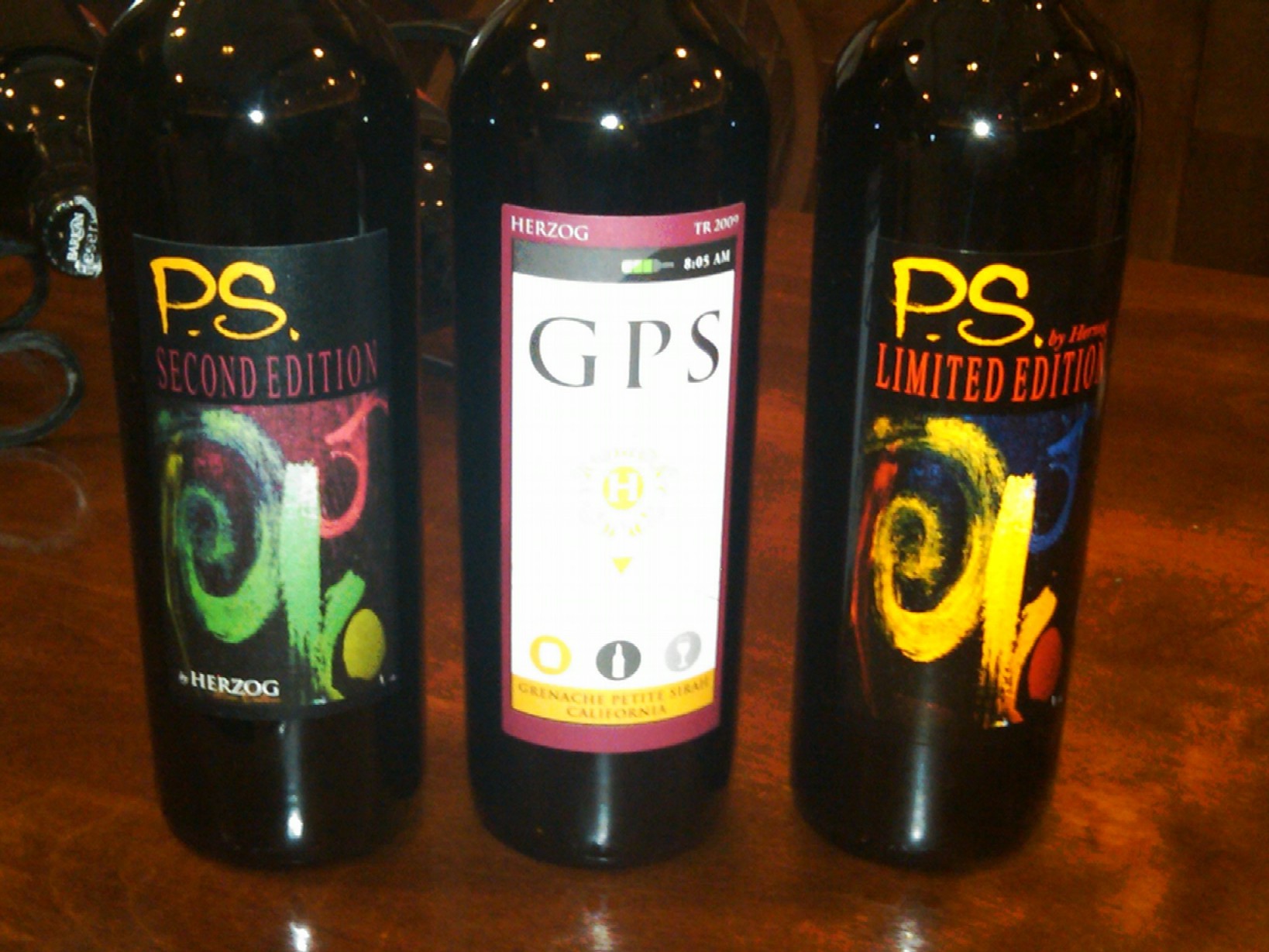
I remember wine from 30 years ago (Manishewitz), wine from 20 years ago (Baron Herzog White Zinfandel) and wine from 10 years ago (Herzog Reserve Alexander Valley Cabernet – still a consistently great wine btw).

And while I have not written too much about cooking/food over the years (damn, I’ve been blogging since 2007) I am very much a foodie and remember restaurants from 30 years ago (Shmulke Bernstein’s), from 20 years ago (Noah’s Ark) and from 10 years ago (Le Marais).

Seeing where kosher wine & food has come from makes me nostalgic.

SO you ask, where are kosher wine & restaurants these days…???

Well, there are many Cabernet Sauvignon, cabernet based blends or similar big-bodied wines that have been rewarded with high-scores – and deservedly so.  The best of these complex, elegant, full-bodied wines are excellent.

As to restaurants, there are some good ones on the scene now and over the past decade.  Places such as Va Bene, Tevere, Le Marais and the Prime Group.  Old world Italian,  French or American Bistros…places where kosher consumers can bring non-kosher guests & feel proud (kosher isn’t just knishes, hot dogs or deli sandwiches).

Well, the point of this whole personal kosher history is a prelude to my observation that kosher food has surged ahead of wine.

I had dinner the other night at Pardes.  This 5 month old restaurant is at the cutting edge of molecular gastronomy with its unique & creative menu, its unpretentious hipster decor & artistic presentation – all at very fair prices.  This follows a recent dinner at Basil (whose menu was constructed by the owner/chef of Pardes) as well as quality time out West in Oxnard California where I was treated to the delectable creations at Tierra Sur.  My experience at each of these three has me confident that we are seeing a new generation of chefs stepping up the quality level of kosher food/restaurants to yet a new height.
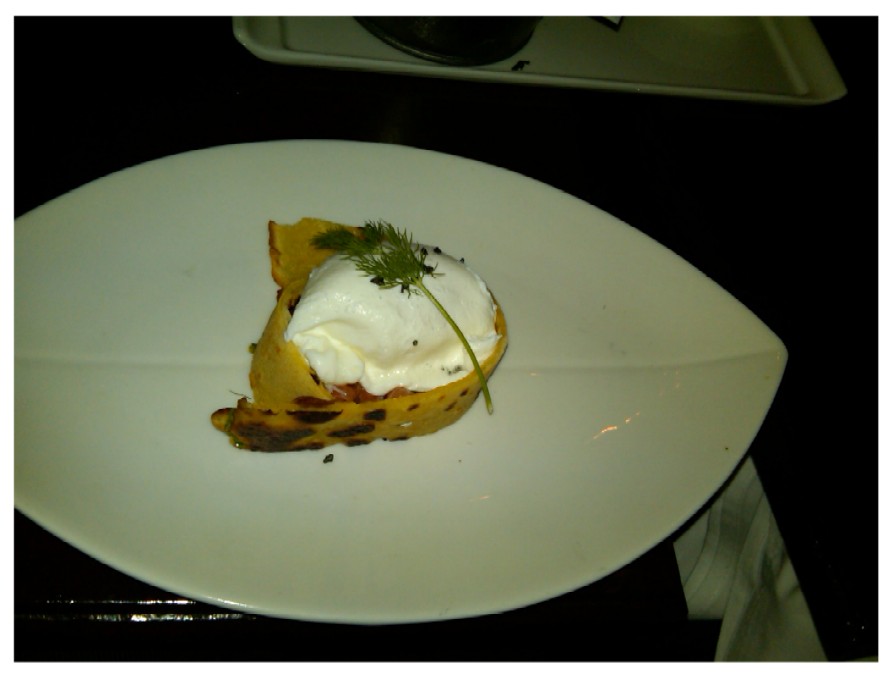
But I fear wine is lagging.  Sure there are some great wines to accompany a good steak or roast, but what about dishes such as Pardes’ Salmon Tartare wrapped in Socca & topped with a poached egg, Basil’s Parmesan & white asparagus, wood burning oven pizza or Tierra Sur’s Fennel and orange zest encrusted Ahi tuna???  Sure there is a decent Chablis, a good New Zealand Sauvignon Blanc and an expensive but nice Laurent Perrier Brut rose’ & champagne.  But the selection of good quality kosher wines OTHER THAN big Cab, merlot, zin or Syrah based wines is limited.

While at Pardes the other night I found myself lacking a quality wine pairing for many of the gourmet courses.

In general, there are few if any good Pinot Noirs (will there ever be a top-line Grand or Premier Cru kosher Burgundy?), no decent German Rieslings, French Sancerre or other well-priced high-quality food-friendly wines.  Is there even a demand for these kinds of wines??

While the kosher world should be proud of the upward trend of high quality kosher offerings for both food & wine, I hope kosher wine offerings will broaden to include wines that will allow kosher foodies to accompany their non red meat meals with subtle wines and not just big Cabernet style wines.

Happy kosher food & wine pairing!

WTG
Surging kosher (and more)

March 5th, 2011

It has been MANY weeks since my last post.  Producing an event with 2,000 guests is all consuming.  And though the event is now behind us, blogging is much like going to the gym – once you lose momentum it is hard to get back in the groove.  But I’ll try…

I have a lot on my mind these days.  The event I worked on was the Kosher Food & Wine Experience (www.kfwe2011.com).  As I walked the hall at Pier 60 on event night I was truly struck by the quality of offerings.  There were a huge (0ver 300) number of wines on offer, from wine producing countries such as Italy, Spain, France, Australia, New Zealand and the country possibly producing the best kosher wine, Israel.  But I have been fortunate enough to witness the high level of wines being made the past 5-10 years.  What really struck me was what is going on in the kosher food industry.  Joining the ranks of high quality restaurants Prime Grill, Le Marais & Tevere, are new cutting edge culinary establishments Basil, Pardes, Pomegranate & the team behind Got Cholent? & Gemstone Catering, amongst others.  Lamb Meatballs with Turnip & Olive.  Seared Tuna Loin over Mango & Jicama salad.  Brandy Frangelico chocolate mousse topped with sugar coated toasted hazelnut.  These were just some of the dishes offered at KFWE2011.  Overall, I think the kosher industry has really turned a corner, and the best is yet to come.

A quick example of the treats kosher foodies have at their disposal is the 5 course whiskey & kosher food pairing taking place tomorrow.

I want to end this post on a somber note.  The world lost an amazing man the other day.  Good friend, and kosher food & wine lover Ilan Tokayer passed away in Northern California.  Since hearing the tragic news yesterday morning I have cried more than I have in many, many years.  Ilan was a bright, optimistic, warm, open, giving, Zionistic young man training to be a winemaker.  He and I talked about a winery we would open in Israel one day.  Details of Ilan’s passing are still unknown to me.  What I do know is that I am absolutely heart-broken.  To say that Ilan will be missed is an understatement.  My heart goes out to his family and friends.

Every day is precious folks…treasure life.

WTG

The end of decanting?

January 16th, 2011

There is something magical about decanting a wine, whether or not it really needs it.

Pouring from a standard bottle into a fancy oddly-shaped glass receptacle makes the drinking experience more ceremonious.

But is this extravagance necessary?  More often than not it is simply unnecessary.

For practical purposes, we decant for two reasons.

  1. To aid in the breathing of a wine – generally a young wine.
  2. To remove the good wine from its sediment or the particles that begin to form & “drop out” of an aged wine.

There is some benefit to the first, but as readers of this blog know, I am an advocate of both the vinturi aerator for young wines as well as rigorous glass swirling for aid in breathing with a young wine.

And as for the second, careful pouring can prevent sediment from reaching the glass and as such makes the idea of decanting somewhat frivolous.

But it is this second reason that has the inventors of this new bottle claiming that the decanter will soon become  extinct.

It seems the shape of this new bottle cleverly enables the sediment to get trapped in the bottom “compartment” preventing the escape of sediment from the bottle to the glass.

What will they come up with next…???

Happy sediment free Wine Tasting!

WTG

Wine allergies & sulfites

January 6th, 2011

Another quickie…

Just about every time I do a wine tasting I’m told by at least one person that they are “allergic to red wine & must be allergic to sulfites. Well, I’m no expert, but I did just read one of the best responses to such an inquiry (on Wine Spectator online).

Here it is…

A: Sulfites get the lion’s share of blame when people have an allergic reaction to wine (or have a next-day reaction from overindulging), but according to allergist Neil Kao, a spokesperson for the American Academy of Allergy, Asthma & Immunology, only 1 percent of the general population has a true allergy to sulfites. That goes up to about 4 to 5 percent among people who have asthma. Kao says that an allergic reaction to sulfites would begin with tingling, redness, itching and a swollen tongue, and then depending on the severity, progress to hives or an asthma attack. For more information on other potential allergens read our previous Q&A on  and the .

But none of this is particularly helpful to know if your guests want to avoid sulfites in wine and you need to serve them something fitting that bill. Here’s the deal: the fermentation process for wine produces very low levels of sulfites naturally, so there are few wines with no detectable sulfites. Many winemakers also add sulfites to wine after fermentation to increase the wine’s shelf-stability and prevent undesirable bacteria and yeast growth, but some don’t and they (or their importer) occasionally advertise themselves as such. One shortcut if you don’t want to do your own research: in the U.S., the certified organic label indicates that the wines were made without added sulfites (but note that that is different than wines with the “made with organic grapes” label, which can contain added sulfites). U.S. law requires that all wines with sulfites in excess of 10 parts per million be labeled with the disclaimer “contains sulfites,” but some people with sulfite allergies may be sensitive to wines with less than that amount.

Have a question about wine and healthy living? .
Browse our archive of previous .

Hope this clears things up for some of you.

Happy allergic-LESS reaction red wine tasting!

WTG

Best Wine Club EVER

December 26th, 2010

A quick holiday weekend post.

I enjoy drinking wine with friends & colleagues, but my favorite wine tasting are BYOB “wine club” style tastings.

Simply put, gather anywhere from 4 to 12 (or however many you have room for) people and have everyone bring in comparable wines (same varietal, vintage, country of origin, etc).  I’m a fan of the blind tasting, but this can be done blind or not.  The wines are opened and moving through a wine at a time, the group gets to taste multiple wines for the cost of a bottle, and discuss said wines with the group.

In general these discussion are compelling & educational.  When done blind, they are also generally pretty funny…and humbling!

About 10 of us gathered last week for a kosher BYOB tasting – our only theme being cost – that the wine should retail for >$40.  There were 6 wines from Israel including a Castel Grand Vin, Yatir Forest, Single Vineyard Kayoumi Shiraz from Carmel, Bustan Merlot (that seemed to be corked) and two single vineyard Merlot’s from Yarden.  We also had a French Wine (’99 Giscours) and a Cali Cab (City Winery Obsidian Ridge).

The tasting seemed to be enjoyed by all.  Though we tasted blind, we knew ahead of time what the 8 wines to be tasted were.  And by process of elimination, some of us successfully guessed which wine we were tasting.  A feat not typically easily achieved – we decided that there are too few kosher wines if we were able to successfully guess the wines.

Overall it was an enjoyable experience and I’m already looking forward to the next club meeting.

Happy Wine Club blind wine tasting.

WTG

Drinking mature wine…

December 6th, 2010

I had one of my most enjoyable tastings a few days ago.  I got to taste about 20 wines ranging in age from 7-11 years old, all stored in optimal conditions.  I knew which wines I would be tasting ahead of time and was concerned that many would be past their prime and possibly even dead.  Lo & behold, the wines were all alive and quite spectacular.

It is said that 95% (or thereabout) of wine in consumed within 24 hours of its being purchased.  Which leads me to believe that most people have not had the extreme pleasure of drinking a wine that has had time to mature in the bottle, a bottle aged wine.

From “The Billionaire’s Vinegar”: “Crudely, the molecular changes known to unfold in a sealed wine bottle that has been laid down for years involve the gradual interaction of oxygen and wine.  Simple chemical compounds break down and recombine into more and more complex forms called polymeric phenols.  Acidity and alcohol soften.  The largest compounds – the harsh, astringent tannins – drift down into a carpet of sediment, taking with them the saturated, inky pigments.  They leave behind a mellowed, unfathomably subtle flavor and a brick-red hue.  Everything knits together, resolving into an ever finer complexity expressed fragrantly in the wine’s bouquet.”

The chapter gets into more detail about mature wine (while discussing Bordeaux purported to be from Thomas Jefferson’s cache dating back to the late 1700′s, and declares that “a wine is considered mature when it has maximized its flavor possibilities but has not yet begun to deteriorate”.

I still believe that beauty is in the eye of the beholder.  Some people prefer the primary aromas and flavors of a young wine, while others prefer the tertiary characteristics.  Of the wines I tried at the tasting I was shocked to discover that not only were most of the wines alive, but they were still displaying youthful fruit.  Their color was almost across the board still ruby, not showing very much (if any) of the brick color that is indicative of an aged wine (as it goes from purple to ruby to brick and ultimately towards brown as it reaches the end of its life).

I tried 5 Bordeaux, 3 Spanish wines, 2 wines from California and 9 wines from Israel.

The Bordeaux was all quite nice and I wish I had time with each bottle to enjoy it as it evolved.  Sadly this was a bit of a speed tasting for me as my job on this evening was simply to verify that the wines were still alive.  They were alive yet I couldn’t help but think they all seemed a bit lite.  They were definitely light in body.  I wonder what types of characteristics would have been revealed had I had more time with these wines.

Next were the Spanish wines from Capcanes; A 2000, 2001 & 2003.  These were probably my Read the rest of this entry »

Flash Pasteurization is NOT harmful (when done right)

November 14th, 2010

Kosher wine has a ton of stigmas attached to it.  It is all sweet, thick, flabby.  It is only made from the Concord grape.  And of course, it is BOILED.

It a very brief nutshell, NO, not all kosher wine is BOILED – actually I don’t think ANY kosher wine is boiled.

So where does this mis-information come from?  It comes from the fact that SOME kosher wines are further classified as “mevushal” – FLASH PASTEURIZED.

Flash pasteurization is a process used by NON-KOSHER wines too, including Louis Latour (“The wine is passed through a heat exchanger that raises the temperature to 72°C for 2-3 seconds”) & Beaucastel (“The skins of the grapes are heated briefly to 80 °C / 176 °F and then cooled to 20 °C /6O °F”) to name two.  This pasteurization is sometimes done to bring out aromatics, and other times to remove potentially harmful bacteria & “stabilize” a wine much like fining or filtering does.

Kosher wine that has gone through flash pasteurization does so to enable all people (regardless of religion & level of observance) to handle a wine.  (According to Orthodox Jews non-”mevushal” kosher wine may only be handled by Jews to maintain its classification as “kosher”.)

I want to break another stigma.

“MEVUSHAL” (flash pasteurized) wines DO NOT AGE.

HA!

I had the good fortune of drinking a 1996 Herzog Reserve Alexander Valley Cabernet Sauvignon wine the other day thanks to a new wine friend.

This wine was gorgeous!  At a very mature 14 years old, this mevushal wine was soft & velvety with fresh fruit & berries.  An elegant wine that has aged quite gracefully and had a long luxurious finish.

What can I say…don’t believe everything you hear or read (just because you read it on the internet… ;) …).

Yes, some mevushal wines that go through flash pasteurization prematurely age due to poor pasteurization methods.  But when done right, this process seems to have no negative effects on the wine.  On the contrary, maybe it does in fact rid wine of bad bacteria and make it MORE age worthy…???…I know the mevushal Cab from California’s Herzog Winery sure aged well!!

Happy Mevushal wine tasting!

WTG

Wine of Israel “Mediterranean Inspiration” 2010

November 3rd, 2010

Following the success of the first Wines of Israel tasting, the Israeli Economic Mission with the help of the Dunn Robbins group put on the 2nd Wines of Israel event today in NYC (following a similar event in Houston this past Monday).

Though I was able to sneak around and taste the wines of some other Israeli wineries I spent a majority of my time at the Carmel table, proudly pouring wine.

As a Carmel (and Yatir) employee I don’t think it too appropriate to get into too many details about specific wines, but I would like to share a few general thoughts.

The number of wineries represented at the event was down from 20 last time to 15.  I believe this is in large part due to the significant investment required to participate (cost of wines, airline tickets, hotels,  ”table” cost, etc.).  Given the exposure I think it is worth every penny, but it is still a significant expense that is probably not fiscally possible for many of the smaller wineries.  (I do believe all the large “commercial” wineries were there.)

There was a four person panel and once again I was a bit disappointed by the overall tone which seemed a bit negative.  Sure Israeli wines have had a challenging time overcoming the stigma of “kosher wines”, but I think Israeli wines have across the board made tremendous strides and most industry people recognize this   As a whole the industry would be better served by focusing on the positive developments rather than the challenges it still faces (which I think is a topic more appropriate for internal discussion).

Overall however this was really a tremendous event.  Well attended by members of the press & trade, people I spoke with were WOW-ed by the wines they tried.  Of the wines I tasted at other tables I felt almost all were very well-made wines that we can all be quite proud of.  Sure there was an overly oaky Chardonnay, an overripe Cabernet and lots of wines with alcohol levels exceeding 14% abv, but there were few (if any) wines I’d be embarrassed to serve in my home.

I now, more than ever, firmly believe that there IS a place in the mainstream wine world for Israeli wines.  I hope today’s event helped many of the attendees to share that sentiment.

Happy Israeli Wine Tasting!

WTG

Sweet Red wine is GREAT!

October 26th, 2010

Yes, I said it, sweet red wine is GREAT!

I was at a food/wine trade show today and had a great conversation with a young lady.  She came by to taste some wine and said that she would like to be more into wine but doesn’t like the bitter & tannic (not her exact words) taste of most red wines she has tried.  So she reluctantly said she would take a Chardonnay.

Lucky for her, among the wines we were sampling was a semi-dry red wine.

I know, these semi-dry wines supposedly aren’t meant for serious wine drinkers.  They are not known as classy wines.  They are said to be used for sacramental purposes.  They are seemingly terrible.  WELL, actually, when made well (with the care given to table wines) they can be great.

But most important, they are a GREAT TOOL.

Most people did not grow up drinking wine, or other dry beverages.  We grew up on soft drinks…soda, fruit drinks, juice, etc.  Our palates are not used to dry drinks.

Sweet (or semi-sweet) red wines are great.  It is a gateway wine (her words) to getting into the more typical dry table wines.

Happy sweet red wine tasting!

WTG