Archive for the ‘wine - kosher’ Category

Best Bet Passover Wines – Vol 2.1

Sunday, March 7th, 2010

Ahhh…Israeli wines.  A combination of two things I most cherish (along with my wife & family of course) in this world; Israel & wine.

Working in the wine industry has afforded me many opportunities to taste wines.  In recent years however it has also prevented me from participating in wine events (such as the Gotham Kosher wine Extravaganza) in the role of wine writer as I had in previous years.  As such there may be wines I will write about strictly on how I remember them (probably previous vintages) or based recommendation from respected friends.  And further, there may be wines that I omit, as negative feelings following a break up (professional) prevents me from speaking nicely about an Ex.

Many of my favorite Israeli wines (more…)

  • Share/Bookmark

Kosher Food & Wine has arrived

Friday, February 5th, 2010

My posts have been increasingly inconsistent of late as my new job has me working night and day representing amazing wines and helping to plan fabulous events.

This past week saw it all come together with the culmination of the 4th annual “Kosher Restaurant & Wine Experience” on Feb 1 in NYC & the 3rd annual “International Food & Wine Festival” on Feb 3rd in Oxnard, CA.

http://www.acteva.com/evaxart/evax/art/KRWE2010Logo_Acteva.jpg

I helped out with a bit of the planning for the NYC event and have been ecstatic to hear all the positive feedback (with a dash of criticism thrown in of course).

And while I had little (OK, nothing) to do with the planning of the West Coast event, I was privileged to represent Israeli standout wineries Carmel & Yatir – whose wines also received rave reviews from the attendees.

Though high priced items such as the Yatir “Forest” attracted lots of attention, having spent MANY hours (on my feet) pouring the Carmel/Yatir wines I found that people were pleasantly surprised by the resurgence of Carmel and the new “Private Collection” (new label & no longer mevushal/flash pasteurized) & “Appellation” series wines.  Though the Appellation Carignan & Petite Sirah (both old vines incidentally) have been cult favorites for years among Israeli wine lovers, other Appellation wines such as the 2007 Cab Franc (in NY) or the 2006 Cabernet Sauvignon/Shiraz (in CA) were also very positively received.

Though my wife makes fun of my food critiquing, I am far from a food critic (can you say Food Tasting Guy?).  Yet I managed to sneak away from my post at the CA show a few times and marveled at the culinary genius of Tierra Sur Chef Todd Aaron’s creative and delectable cuisine.  It was so good I reserved a precious spot to go back for dinner prior to my return flight to NY early next week.  Now if I can only figure out a way to get the company to cover the tab…

Happy mind blowing-ly good KOSHER food & wine tasting!

WTG

  • Share/Bookmark

The Cali Cab that wasn’t a fruit bomb

Saturday, November 21st, 2009

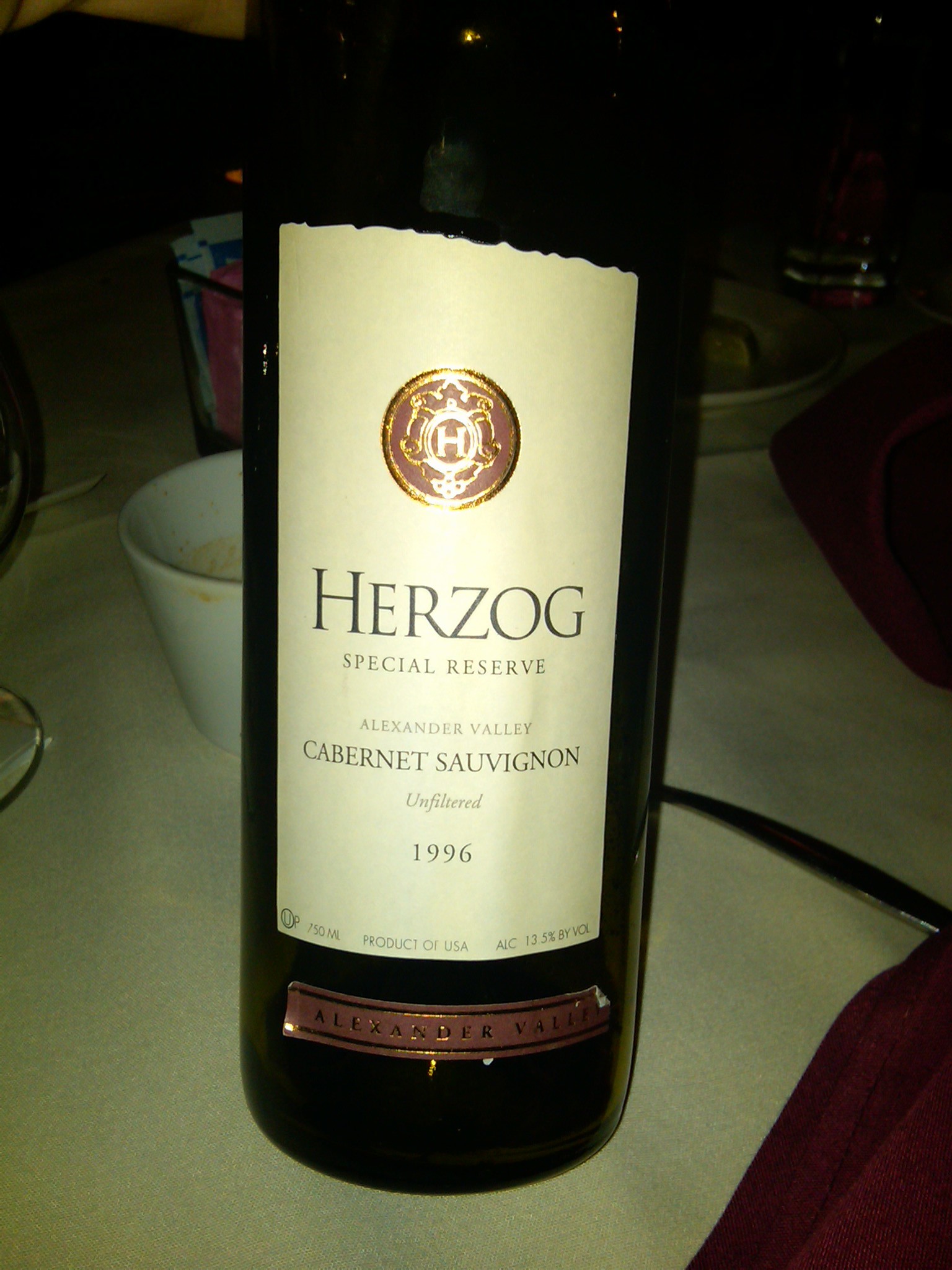
I’ve had the wine before.  It is a kosher Cabernet Sauvigon from California.  Not Napa Valley, but Alexander Valley fruit.  Having tasted previous vintages of it, I was not surprised to hear that it was awarded 90 points from Wine Enthusiast.

2005 Herzog Special Reserve Alexander Valley Cabernet Sauvignon

For those of you who do not know, The Alexander Valley is in Northern Sonoma County just North, Northwest of the more famous Napa Valley.  Like Napa it is littered with wineries where they produce great wines.   And while the nuances of the wines made in Napa & Sonoma are different, my experience has been that the styles of wine are similar.  Big, extracted, fruity, high (but generally balanced) alcohol, etc.

I’ll make a confession here…I like big fruity wines.  As a matter of fact my favorite meal is a rare steak & big bad cab.  Sure these tooth staining wines will overpower the flavors of most dishes but it goes oh so well with steak and other hearty rich meats, stews & chops.

So the 90 point score was of no surprise to me.  A big Alexander Cab got a high score.  But then I tried it…

WOW.  This wine reminded me immediately of the wines from another California winery;  Edmunds St John.  Steve Edmunds makes leaner, lower alcohol, terroir driven wines.  And his “Rocks & Gravel” GSM (Grenache, Syrah, Mourvedre) blend is a favorite of mine – when I’m not eating steak ;)

So tasting this lean, earthy, minerally wine was a real treat.  A Cali cab that I can enjoy with more than just a steak.  At 13.8% alcohol with its nice tight structure, this wine wont overpower some of my other favorite foods like chicken, salmon or pasta.  My wife commented on the pretty floral nose while I enjoyed its clean, tart,  forest berry flavors.

And to top it off this wine is mevushal (flash pasteurized).  But no stewed or cooked fruit.  Just real lean & fresh.  Beautiful.

So if you are looking for Cali Cab that got a 90 from the critics but isn’t a fruit bomb go check out the Herzog Special Reserve Alexander Valley Cabernet Sauvignon.

http://www.herzogwinecellars.com/shop/image.php?productid=17

Happy non-fruit bomb Cab tasting!

WTG

  • Share/Bookmark

Wrist update & long lasting “mevushal” wine

Wednesday, September 30th, 2009

I saw my hand specialist today.

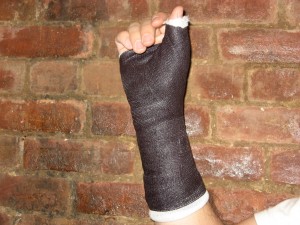
FUN NEWS…I got a new cast.

black cast1

BAD NEWS.

My wrist is NOT healing on its own.  I broke my scaphoid bone.  This is a bone in the wrist, and the location within the scaphoid where I broke it receives very little blood flow – no healing power.  So sadly, after almost 6 weeks in a cast, the break appears to be just as big as it was 6 weeks ago.

It appears that surgery IS in fact in my future.  I am off to Israel tomorrow so surgery will not commence until I return.  This gives me a glimmer of hope that MAYBE it will show signs of healing over the next 2 weeks and we can avoid surgery.  But if not, then it will be 8+ weeks in cast, maybe 9 before surgery.  Then surgery (screws put into my broken bone), re-cast, rehab…arghhh :(

http://orthoinfo.aaos.org/figures/A00012F04.jpg

But did I mention I am going to ISRAEL!!!   WoooHooo!!!!

OK, wine.

I have blogged before about “mevushal” or flash pasteurized wine.  And in general, though the technology is improved, and I believe that the harm done to mevushal wines intended for early consumption is minimal, I must admit that I am not an advocate.  I guess I just figure that if I can have a non-boiled wine or a boiled one I will choose the “fresher” version every time.

Now the biggest knock that people have against mevushal wine is that the flash pasteurization process expedites the aging process, deeming mevushal wines unworthy of long term cellaring.

This past weekend I celebrated a momentous time in my life and while celebrating with new family members imagine my surprise to find a bottle of 1997 mevushal wine, in a closet, standing upright.  The wine, Herzog’s Reserve Alexander Valley Cabernet Sauvignon.  A very fine wine in its youth.  But this one was standing upright (prime cork drying conditions), in a closet without any climate control, and did I mention; the wine is MEVUSHAL – FLASH PASTEURIZED.  These wines are not age worthy.  They are boiled.  Come on Wine Tasting Guy, don’t even bother opening up the bottle – it is SURE to be a goner.

Well, my hand is now hurting, and I took no formal tasting note, but…

…the wine was BEAUTIFUL!  Alive, soft, complex & DE-LIC-IOUS!

Dare I say my biases against mevushal wines are fading???

Happy (and healthy) mevushal wine tasting!

WTG

  • Share/Bookmark

Take a BREAK this weekend & drink local

Friday, August 28th, 2009

OK, the “break” references will end soon.  I’ll get used to this broken wrist thing.  And all will be normal in BLOGLAND.

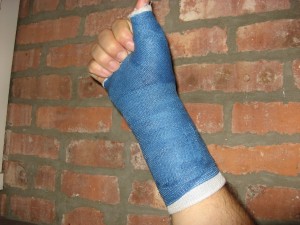
But I want to give a quick wrist update.  GOOD NEWS – It appears (X-ray & CT scan) that my break is non-displaced & in the part of the bone that should lead to normal healing.  SO, for now I get a cool cast & no immediate need for surgery (metal objects drilled into my bones).

broken-wrist-blue-cast

Healing time for this injury is still between 8-12 weeks, so no party.  But the preliminary diagnosis is good.  I follow up with the hand specialist in 2 weeks & will keep you updated.

Now my quick wine related part of this post is something I eluded to in my last post.   I recently met with the proprietor and original winemaker for a NY State (Long Island) winery.  Since I live in NY this is a local winery for  me.  The proprietor has since brought in a trained winemaker to take over, but I learned in my conversation with the gentleman that he is still very hands on.

http://www.redferncellars.com/wine%20poster.JPG

The winery is called “Red Fern”, and they make 4 types of wine, all single varietal. They make a Cabernet Sauvignon, a Merlot, a Syrah & a Chardonnay.  I’ll be writing an article about the winery & their wines for a local paper, but I want to tell you that these wines are GOOD.  Very modern in style, the winemaker gets nice extraction out of the fruit which produces fruity, full bodied wines.  I think this is of interest as NY state wines sometimes have a problem with ripeness.  And when the fruit does not fully ripen the wines tend to have a lean & green dynamic to them.  So making wines such as Cabernet Sauvignon & Syrah, varietals that needs lots of sun/heat to fully ripen can be considered a bit risky.  I’d like to see this winery experiment with some Cabernet Franc or Riesling, varietals more commonly associated with NY given their affection for the NY climate.  Nonetheless, these wines (I tasted the 2005’s) were very nice and get my recommendation.  And oh yeah, they just happen to be kosher.

Happy locally produced wine tasting!

Wine Tasting Gimp

  • Share/Bookmark

“Kosher brand tops the chart”

Thursday, July 2nd, 2009

Not JUST kosher, but kosher FROM ISRAEL!  OK, so it was not a kosher wine, rather kosher marshmallows.  I found the article “Kosher brand tops the chart” in the San Fransisco Chronicle while I was out West the other week.

Just like a wine tasting, the panel tasted 5 marshmallows BLIND (cool huh?) and scored each, with a perfect score being 100.  And the winner…by A LANDSLIDE….(drum beat)…. the ELYON marshmallow.

http://i.ehow.com/images/GlobalPhoto/Articles/2284773/ElyonFishGelatinMarshmallows-main_Full.jpg

While the ELYON scored 80 (out of 100) points, the other 4 tasted scored between 42-49 points.   Price per weight, these marshmallows, imported from Israel, were not even the most expensive ($3.99 for 7 ounces).  That honor went to the Whole Foods brand (43 points & $6.49/10.5 ounces).

SO what does this tell us about kosher?  Probably nothing, but maybe…just maybe, it tells us that kosher (from Israel or elsewhere) can be just as good (or dare I say better) than non-kosher products.

My only hope, and the reason I write this post today, is that I am tired of hearing people say “I am not kosher, I don’t need/want/like that kosher product”.  ESPECIALLY when it comes to kosher wine, which is made THE SAME WAY as all other wine (sans the unnecessary animal byproducts).  Instead I wish people would perceive kosher similarly to how they perceive organic, sustainable, animal friendly, etc – a product that had special consideration given to a specific set of criteria.

Speaking of kosher wine, I attended a truly amazing kosher wine tasting last night.  Oshra Tishbi of Tishbi wines together with a representative from Tishbi’s US importer (Admiral imports), showed off some lovely wines as well as hand crafted olive oils and fruit preserves (the “sangria” flavor was spectacular).  I’ll hopefully be writing more about this tasting in the coming days.

Happy KOSHER wine tasting!

WTG

  • Share/Bookmark

Bottle variation??

Wednesday, April 15th, 2009

I’m drinking a lot of Israeli wine here in Israel during the Passover holiday.  Then again that should not come as much of a surprise to anyone who frequently reads this blog as I ALWAYS drink a lot of Israeli wine.

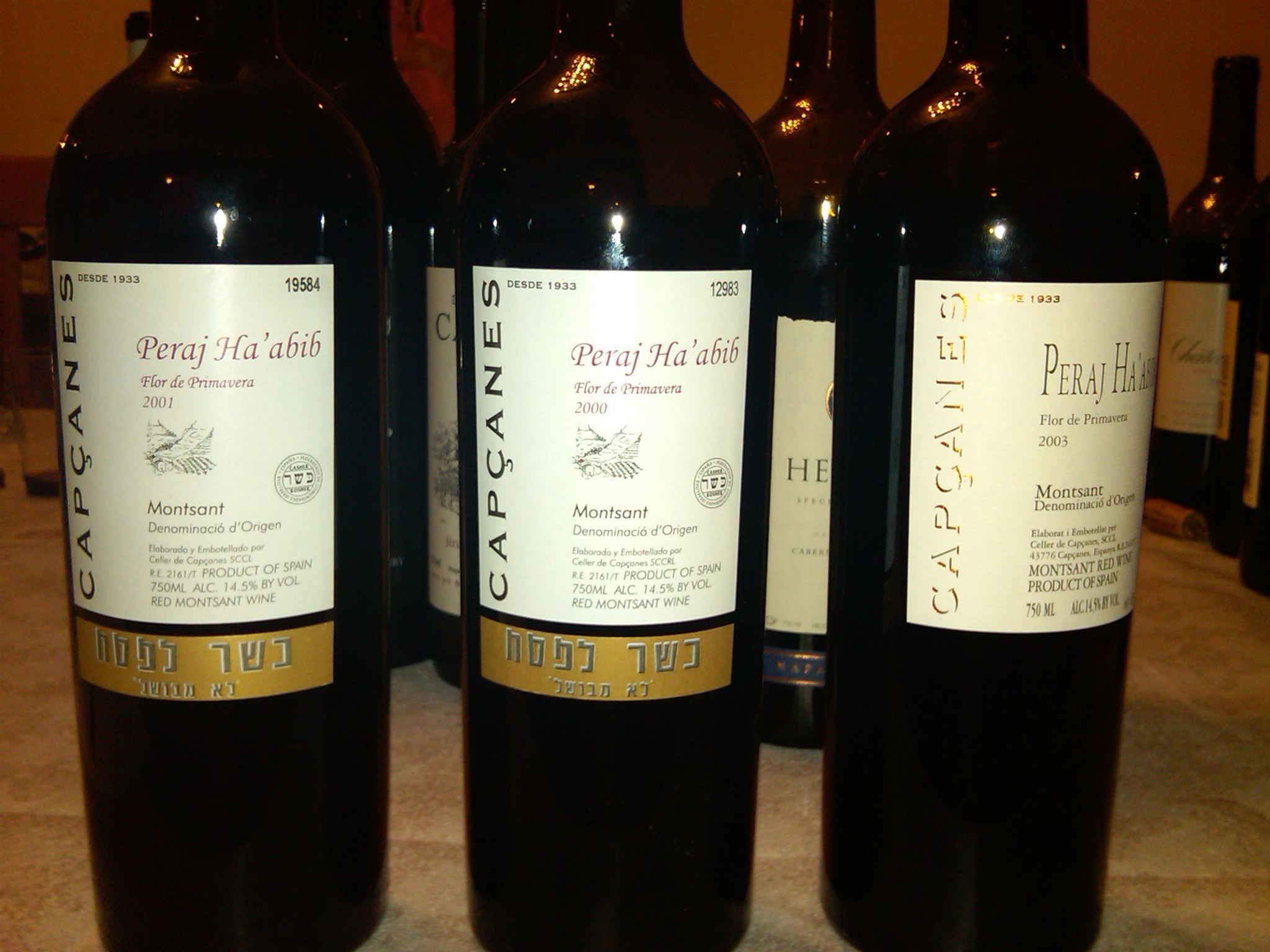
That said I had the opportunity to get a terrific wine at a very affordable price here in Israel that unfortunately is NOT an Israeli wine.  Capcanes, a Spanish winery whose wines I have previously written about makes two kosher (and kosher for Passover) wines.  The big boy is the “Peraj Ha’abib”, which is just like perach Ha’Aviv or “Spring Flower” in hebrew.  So through a friend I was able to get my hands on a few bottles of the 2005 Capcanes Peraj Ha’abib here in Israel for the rough equivalent of about $40.  This wine sells for about $60+ back at home in NY, so I figured I’d grab a few bottles and indulge.

I opened up the first of the 3 bottles with my family at our Friday night meal.  It was showing BIG/STRONG oak characteristics, with almost over-powering cloves.  Not everyone at the table picked up on it, but it was unmistakable to me.  The mouth feel of the wine and the underlying fruit were both very nice, but this wine was dominated by its toasty clove aromas.

I then opened up the 2nd bottle on Monday night while dining with the special lady at a fancy Jerusalem restaurant.  This bottle was the same vintage, same winery, same wine…and I believe SAME CASE.  Yet it was COMPLETELY different from the first bottle.  This time the wine had a similar mouth feel yet the dominant clove aromas were GONE.  Beautifully integrated oak and fruit, with the fruit shining through. 

SO, getting back to the title, there is something in wine known as “vintage variation”.  This happens as hand crafted wines will vary from vintage to vintage.  Different weather patterns, longer/shorter growing seasons, more/less rain/sun, etc… – all these factors lead to differences in vintages and wines from different vintages that are remarkably different from one another.

But to happen to the SAME wine from the SAME vintage and the SAME case?

I suppose this could happen in a tiny winery where the wines were aged in different barrels and then bottled without being re-blended???  But I would imagine that most wineries, even small one, will mix all the barrels together in a tank of sorts before bottling.  So how/why could something like this happen?  Have you ever experienced anything like this before???

Happy same wine different flavor wine tasting!

WTG

  • Share/Bookmark

Passover wine recommendations

Thursday, April 2nd, 2009

Welcome to my 2nd annual Passover wine recommendations post. I hope you will forgive me as I begin with some shameless self promotion. My 2008 Passover wine recommendations can be found here.  While I recently wrote an article for the Jewish Press about “blends” for Passover here.

http://orlandokosherevents.com/yahoo_site_admin/assets/images/iStock_000005811198XSmall_Passover_Wine__Matzo.31592200.jpg

Before I make my recommendations I want to reiterate something I constantly preach.  DRINK WHAT YOU LIKE.  Too many people focus on what critics, salespeople, friends or contemporaries tell them they SHOULD like.  Nobody knows your palate but you.  So try as much wine as you can and pick out wine that YOU will like for the Passover seder and your 4 cups.

OK, onto the wines that either I WILL be drinking or that I’d like to be drinking.

When in the US, I generally get deals on wine and rarely pay full price.  A perk of working in the biz.  But when I am in Israel, besides the occasional free bottle from winery friends, I generally pay full price.  Considering that a 10 person seder X 4 cups per person equates to anywhere from 8-12 bottles, many of us will be watching our wallets and buying modestly priced wines.

Some of my favorite Israeli budget wines include the Golan Cabernet , Carmel Private Collection Cabernet, Dalton Canaan Red or just about any wine from Galil Mountain.  The 2007 Galil Mountain Merlot is great, but I might look to spend a bit more and get the Galil Pinot Noir or newly released Galil Barbera.  The first 4 wines can be found for the equivalent of about $10-12 in Israel and $12-15 here.  While the mid priced Galil wines (Pinot & Barbera) should be under $20 in both countries.  Others to consider in this price range are The Yogev wines and the Segal “Fusion” (blends I need to better familiarize myself with).

The focus of my recommendations will be non-mevushal Israeli wines.  But if I were to pick a mevushal wine in the under $15 category I’d probably go with the Herzog old vine Zinfandel. I’ve been known to go for this wine in a restaurant that only serves mevushal wines as it’s both reasonably priced and of good quality.

Something I have not heard people consider when discussing the options for their 4 cups is sparkling wine.  I know people like to drink red and sparkling is made for sipping (not chugging a full “cos”), but there are some nice sparkling options that should be considered.  A favorite of mine, if you can find it, is the Yarden Blanc du Blanc.  I have also tried the Adar de Elvi Cava Brut and enjoyed it.  I have heard nice things about the Bellenda Prosecco as well as the Teal lake Sparkling Muscat.  All of these sparkling options are under $20 and worth a shot.   Did you know that sparkling wine is said to be “food neutral” and pairs well with ALL cuisine?

Before I dive into the Israeli selections there are a couple of non-Israeli wineries out there I’d like to briefly mention.

In New York I have been hearing really great things about Red Fern Cellars.  I have not tried these wines yet, but I have been told that they are excellent.  Just make sure you are getting wines from the 2005 vintage as earlier vintages were not as successful for this Long Island based winery.

From California, if you can find it, Four Gates is making great wines.  Also worth considering are the wines of Hagafen or of course some of the Herzog reserve wines.  While Four Gates is not mevushal, all the Hagefen wines are and most of the Herzog reserve wines are (now) mevushal as well.

From New Zealand I really like what Goose Bay has done with their Sauvignon Blanc as well as their Pinot Gris.  While I enjoy all the Goose Bay wines these two in particular have a mouth watering acidity and freshness that are quite delicious.

I find most Kosher French wines to be either too expensive or simply not that good.  But I admit that I am not as familiar with these as I’d like to be.  Similar story with Kosher Italian wines though I have heard positive things about some of the Borgo Reale wines.

From Spain there are some high end wines that I really like.  the Capcanes “Montsant” (AKA “Peraj Ha’Abib”) is a great wine as is the Elvi “El 26″.  Problem is these wines are quite pricey ($50-60).  The lower level wines from these wineries are nice, but I still think better options abound at these price levels from Israel.

Which is a good segue back into Israeli wines.

The Yarden Cabernet Sauvignon (2004) was actually the first ever Israeli (or kosher) wine named to Wine Spectator’s prestigious Top 100 wines (of 2008) list.  I also like the 2003 Yarden Syrah.  The 2002 is past its peak so if you are buying this wine make sure it is the ‘03 or ‘04.  It has a classic peppery-ness with some old world gamey/smoked meat qualities.

Speaking of Syrah, and getting back to Galil Mountain, is the Galil Yiron Syrah.  The brother to the classic “Yiron” (a bordeaux blend that is a long time favorite of mine) is  different in style from the Yarden Syrah.  This one screams California or even Washington State Syrah.  BIG blueberries and plums, with a hint of pepper.  A lovely new world style Syrah.

Staying in Israel, some wines I have raved about before are two “Appellation” wines from Carmel.  The Carmel Appellation Carignan & Carmel Appellation Petit Syrah are unique varietals done very nicely by Carmel.  They each come from old vines (which leads to deeper & richer wines) and are worth checking out if you want to try something different.

Speaking of unusual, when many of us think of red wine we quickly think of Cabernet Sauvignon or Merlot.  But these wines are almost always very BIG and can over-power delicate foods.  Some nice options for red wines that are not quite as big bodied are the aforementioned Galil Mountain Pinot & Barbera as well as my next recommendation; the Recanati Reserve Cabernet Franc.  Cab Franc is one of the 5 Bordeaux varietals and this wine from Recanati is both light bodied and complex, showing interesting herbaceousness as well as chocolate notes.

Another winery that makes a Cab Franc is Ella Valley.   I’d like to better familiarize myself with their wines which are a little bit higher in price ($20+ for the low end “Ever Red” and $30-$50 for their higher end and “vineyard choice” series), but I hear very good things.  With vineyards throughout the Judean Hills this winery seems to be doing a great job with the fruit from this premium grape growing region.

Heading back up north to the Galilee I’d like to mention Dalton again.  I grew up on the Dalton Canaan Red, moved onto the Dalton Estate Shiraz (a very rich & extracted wine) and have progressed to appreciating the Dalton reserve series.  This progression is very common for wine drinkers.  We begin enjoying easy to drink reds.  Move up to big, fruit forward reds.  And graduate to subtle, complex and elegant wines.  While the subtle wines of Dalton don’t always garner the highest scores from critics (for reasons I don’t understand) these wines are sure to please the wine aficionado at your seder.

Two of the largest wineries in Israel, are Barkan and Binyamina.  For many years these wineries were producing mediocre wines that were sold throughout supermarkets in Israel.  But in recent years these wineries have really stepped up to the competition and have improved the quality of their offerings.  I hear the Cabernet reserve from both Binyamina and Barkan, each priced around $20, are well worth the money.

Before I get to dessert, I’d be remiss not to mention the darling of Israeli kosher wines, Castel.  This family run winery produces wines that are very old world in style – less fruit forward, more balanced, with subtle fruit, herbs & earth characteristics.  The wines are not cheap, but if you want to splurge on something special you can’t go wrong with the Castel Grand Vin.

If you are still reading, CONGRATULATIONS, you are a real wine-O!  Or at least an aspiring aficionado.

I’d like to finish off by mentioning some terrific dessert wine options.  And they come from Israel’s most well known wineries, Yarden & Carmel.  Beginning with the Yarden Muscat, this wine, which comes in a 500ml. (and very aesthetically pleasing) bottle is a fun treat.  It costs about $15 and is fortified with Brandy.  It is a nice digestif and goes great with anything sweet.  Carmel makes their “Shaal” Late Harvest Gewurtztraminer, which is also a very nice option.  Or you can splurge a bit ($30 for 375 ml.) and go with the highly rated Yarden “Heightswine” (a play on “ice wine”).  Made from Gewurtz grapes frozen in a commercial freezer, this rich & syrapy wine IS dessert.

Happy Passover kosher wine tasting!

WTG

  • Share/Bookmark

“Mevushal” or Flash pasteurized wine

Monday, March 30th, 2009

Working with Israeli wines, most of them kosher certified, I often hear the question; “what makes a wine kosher?”.

Without getting into too many of the details, I explain that it can not contain an ingredient (gelatin or isinglass) sometimes used in the fining (removing particles) of wine.  And it must be made (actually handled) by a sabbath observant Jew.

Another question that inevitably arises relates to a process known as “mevushal” or flash pasteurized.  This is a process whereby the wine (or often the juice pre- fermentation) is quickly brought up in temperature to around 180 degrees F and then (usually) quickly cooled.

http://wine.appellationamerica.com/images/appellations/features/boiling-wine-170.jpg

Wines that have gone through this process can be handled by Jew & Gentile alike and still maintain their kosher status, whereas non-mevushal wines can not be handled by non-Jews lest they risk losing their status as kosher.  I find this practice to be highly offensive and will refrain from further comment.  Amongst the reasons for said practice dates back to pagan rituals/libations done over wine, but only wine that had NOT been boiled.  As such the rabbi’s decreed that all kosher wine be boiled so that Jews would not use pagan wine for their own sacramental purposes.

Many of the better kosher wines today do NOT undergo this flash pasteurization for fear of damaging the wine.  And many wine critics believe that the heating of the wine leads to cooked fruit flavors (rather than fresh fruit flavors) and also prevents the wine from aging gracefully as many “mevushal” wines tend to deteriorate within a few years of their vintage date.

I bring this up as I learned something new about flash pasteurized wine today.  I found an article written by Bill Zacharkiw in The Montreal Gazette whereby Zacharkiw states “The first time I came across the technique of “flash pasteurization” was when I talked with Tomas Perrin of Château Beaucastel, whose Châteauneuf-du-Pape … (is) considered by many … as … the world’s best.

Beaucastel wines undergo a heating process similar to mevushal wines.

Perrin…believes that by quickly heating and then cooling the grapes, the delicate flavors and aromas are more easily extracted from the grape skins, without all the astringent tannins. Also, this type of pasteurization helps protect the wine from premature oxidation, which means fewer sulphites need to be used.”

Interesting huh?

Happy (dare I say) mevushal wine tasting!

WTG

  • Share/Bookmark

Passover wines article

Saturday, March 28th, 2009

My first article about Passover wine recommendations has been posted.  I wrote this article for the Jewish Press and it focuses on blends, or wines made from more than 1 varietal.  You can go to the article here.

I will write my annual Pessach/Passover wine recommendations piece this week.  Stay tuned…

Happy pre-Passover wine tasting (while you clean)…

WTG

  • Share/Bookmark

  • Viagra ordre
  • Cialis en ligne
  • Levitra en ligne
  • Propecia acheter
  • Viagra acheter
  • Acheter cialis
  • Ordre levitra
  • Ordre propecia
  • En ligne viagra
  • Vente cialis
  • Levitra bon marche
  • Propecia en ligne
  • Viagra online
  • Buy cialis
  • Order Levitra
  • Buy propecia
  • Buy viagra
  • Cheap cialis
  • Cheap Levitra
  • propecia online
  • Viagra prescription
  • Cialis online
  • Buy Levitra
  • Order propecia